Two flat roofs laid the same year can age very differently. One lasts twenty-five years, the other leaks after five. The difference almost never comes down to the brand of membrane.
The number of coats
A two-layer waterproofing system — an underlayer, then a cap membrane, with staggered joints — forgives the odd local defect. A single layer laid in a hurry forgives nothing: the smallest weld fault becomes a direct way in. What you save on installation, you pay back in the first hard winter.
The upstands
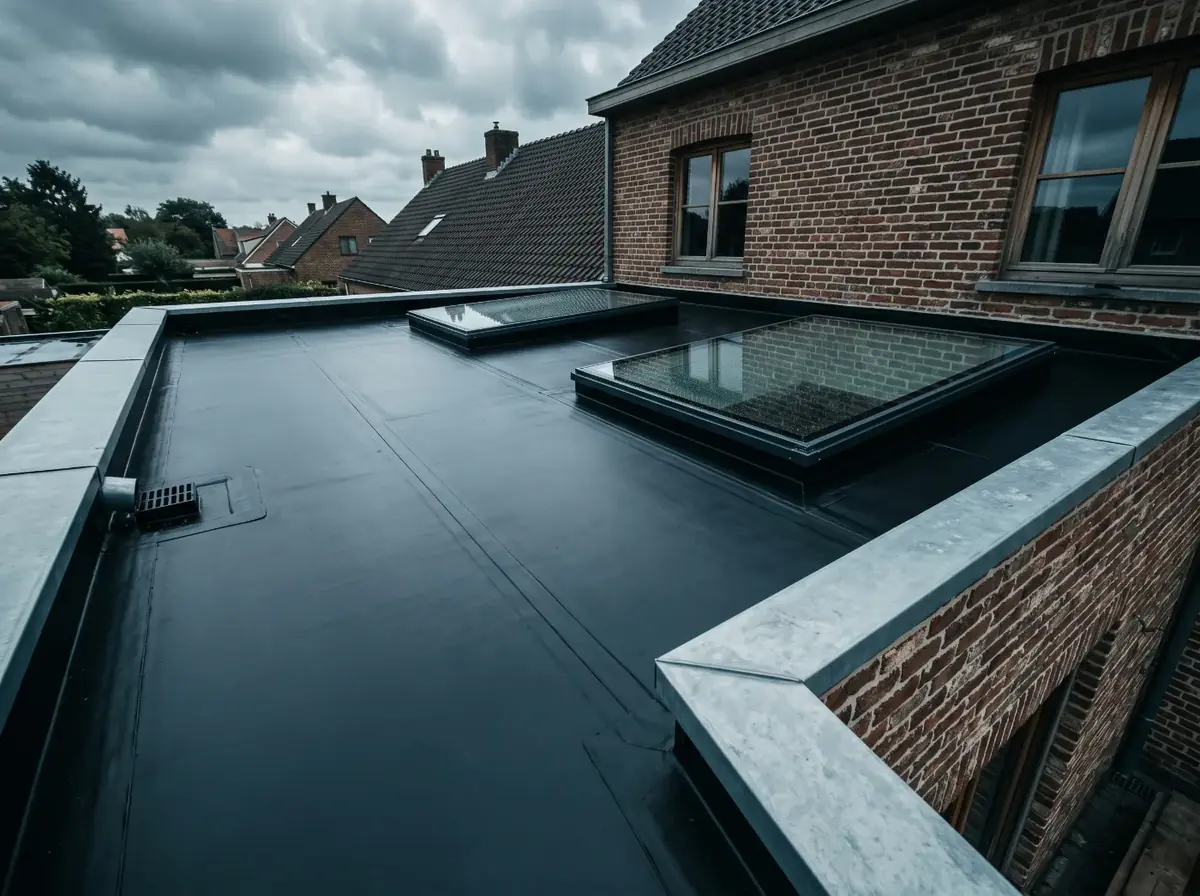
A flat roof almost never leaks in the middle. It leaks at the edges, where the membrane has to run up against a wall, a parapet or a threshold. An upstand that is too short, badly fixed or left unprotected at the top will eventually come away. That is the first thing to check, on a quote as much as on the job.
The fall and the roof outlet
A ‘flat roof’ is never quite flat: it needs a fall, however slight, towards the outlet. A puddle left after rain is acceptable; water standing permanently points to a badly reworked fall or a badly placed roof outlet. Standing water speeds up the ageing of the membrane and wears it out in the end.
There has to be an overflow as well. That is what stops the water overflowing indoors when the roof outlet blocks — and a roof outlet always blocks one day.
What lies underneath
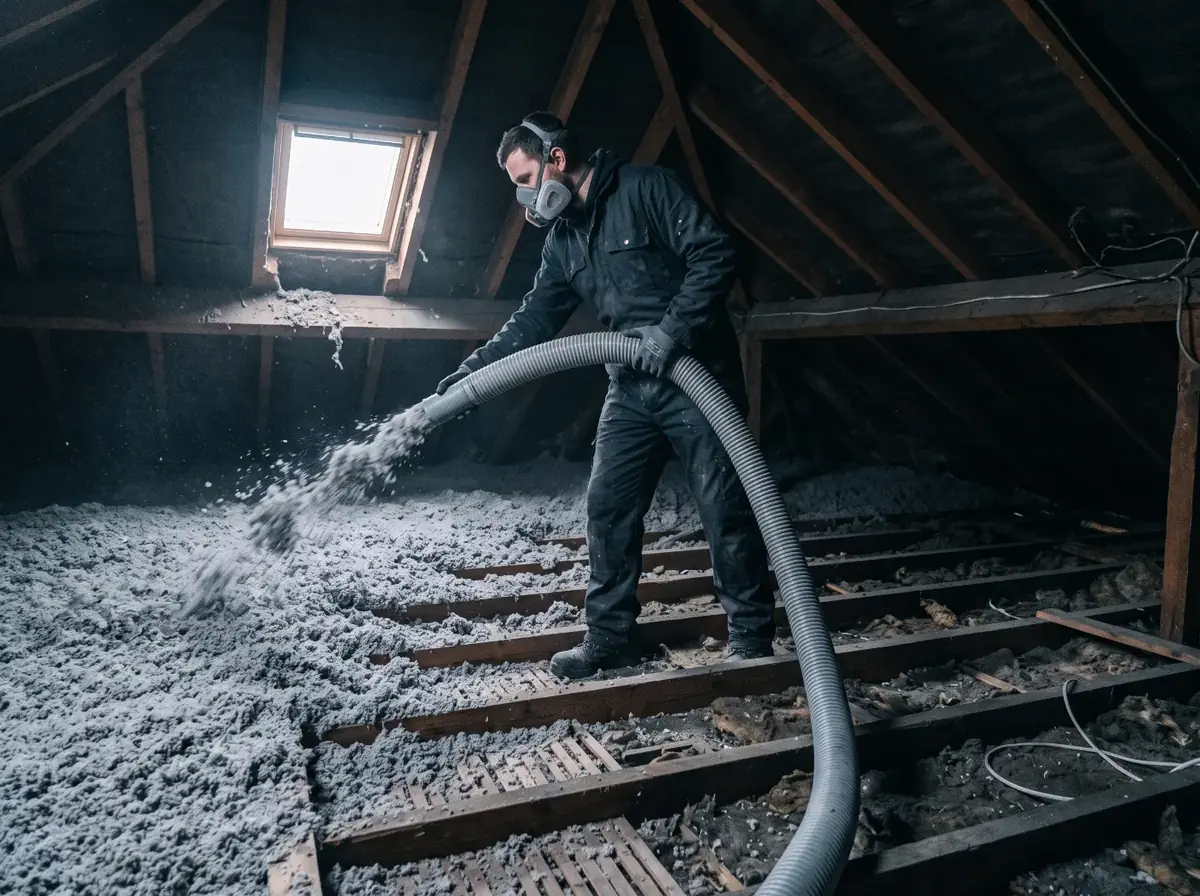
Laying a new membrane over waterlogged insulation just wraps the problem up. A survey first — a few core samples — costs little and saves doing the same job twice. If the insulation is wet, it gets replaced; that changes the quote, but above all it changes the lifespan.
The minimum maintenance
- Clear the leaves and check the roof outlet twice a year.
- Check the upstands and the flashings after a windy winter.
- Never place a heavy point load without protection.
- Have the whole lot checked every five years.