Damaged roof timbers give no warning. They carry the roof for years, until the day a purlin gives way or a rafter sinks underfoot. The signs are there all the same, and ten minutes with a torch is enough to read them.
What we look at
- Frass — fine, pale dust — on the floor, on the joists or on stored belongings.
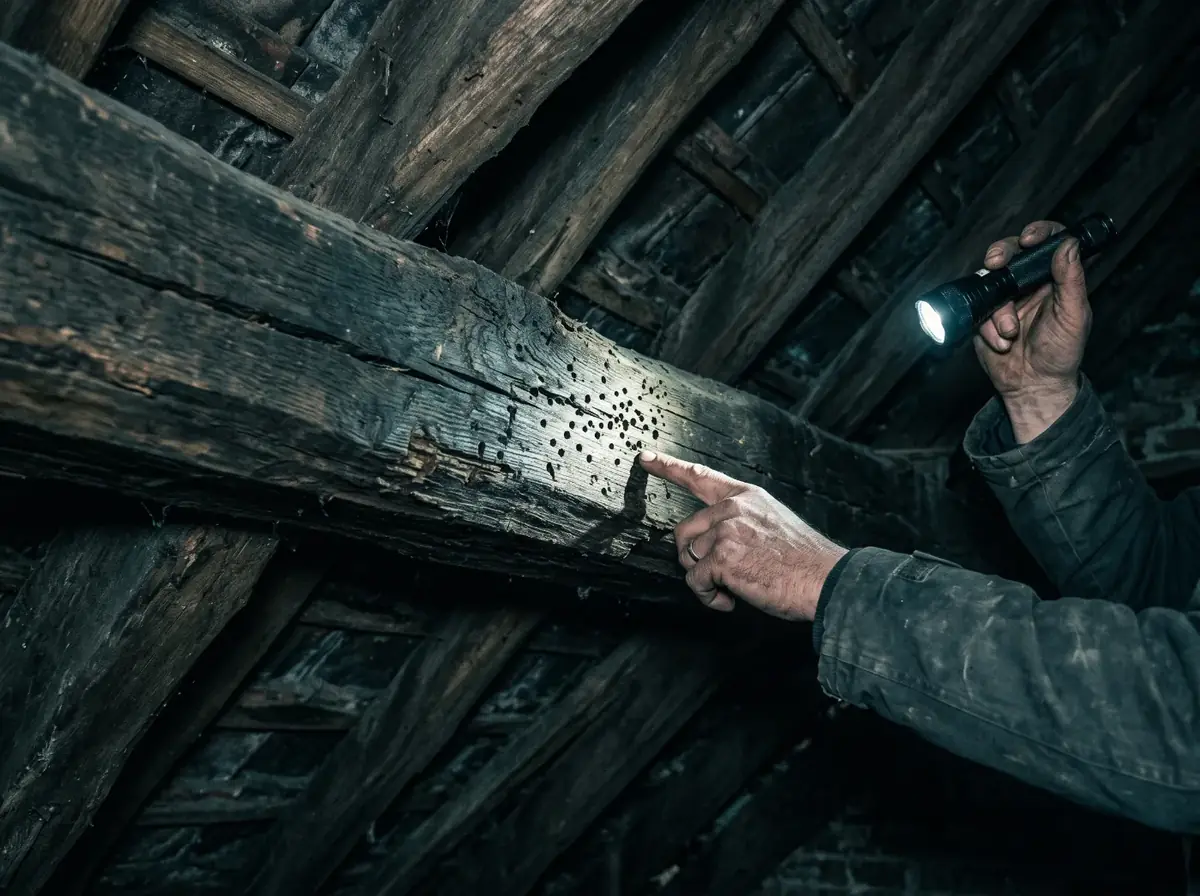
- Exit holes of 1 to 3 mm for the small furniture beetles, up to 8 mm for the house longhorn.
- Timber that gives way under an awl or a screwdriver, especially at the foot of the rafters and near the walls.
- Visible galleries when you scrape the surface of a suspect timber.
- A mushroomy smell and timber cracking into cubes: at that point we are no longer talking about insects.
Insects or fungus
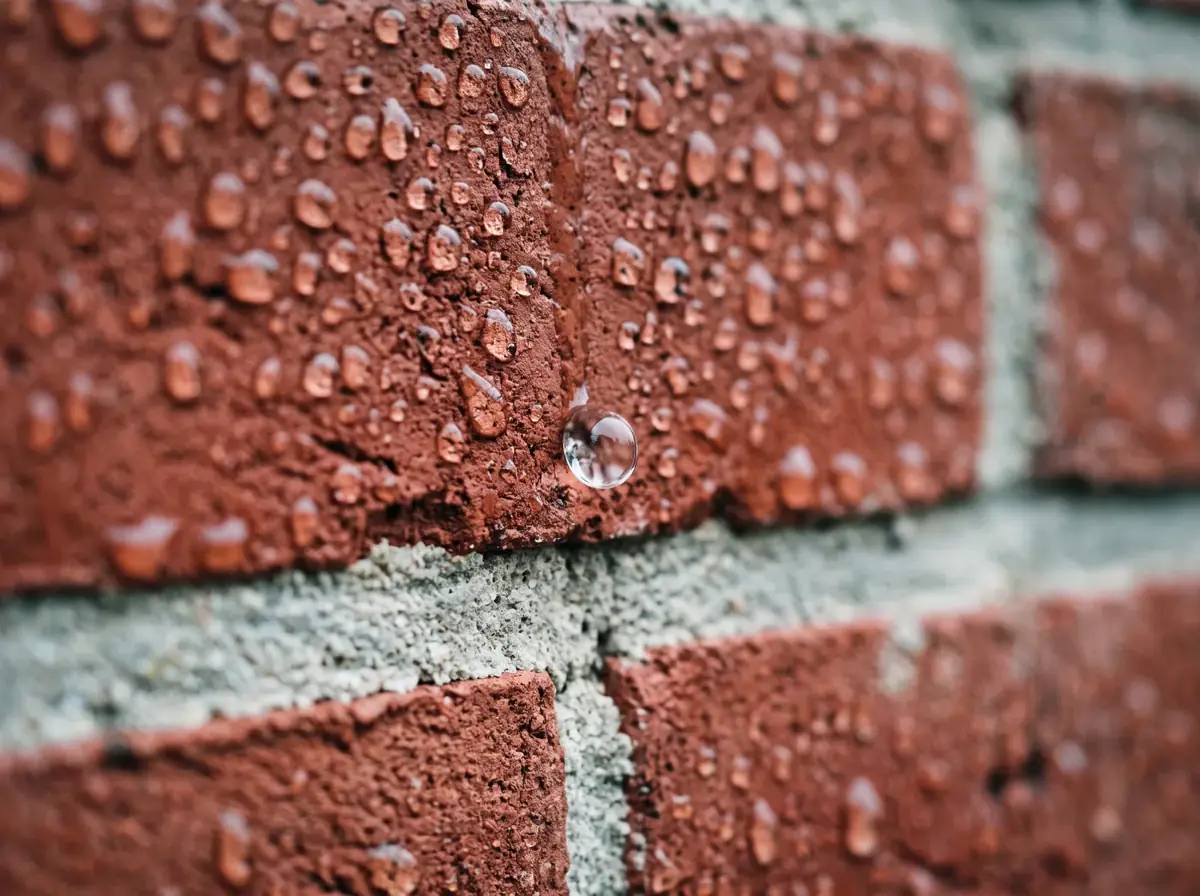
Wood-boring insects attack timber that is otherwise dry. Wood-rotting fungi, dry rot included, need moisture: they appear after a prolonged leak, a wet wall or missing ventilation. The treatment and the budget have nothing in common, and with fungus the first priority is to cut off the water.
A proper curative treatment
Every timber is brushed and dusted down, the parts that no longer carry are removed, the heavy sections are injected, and then the whole is sprayed to saturation. Weakened members are strengthened by doubling them up on both sides or by adding a bolted sister timber.
And above all: treat the cause. Roof timbers getting damp because of a pierced flashing will start again, whatever product you put on them.
When to actually start worrying
Timber that gives way more than a centimetre, a damaged bearing member, a visible sag in the ridge line: those three signs justify a quick visit. The rest can be planned calmly, but not forgotten.