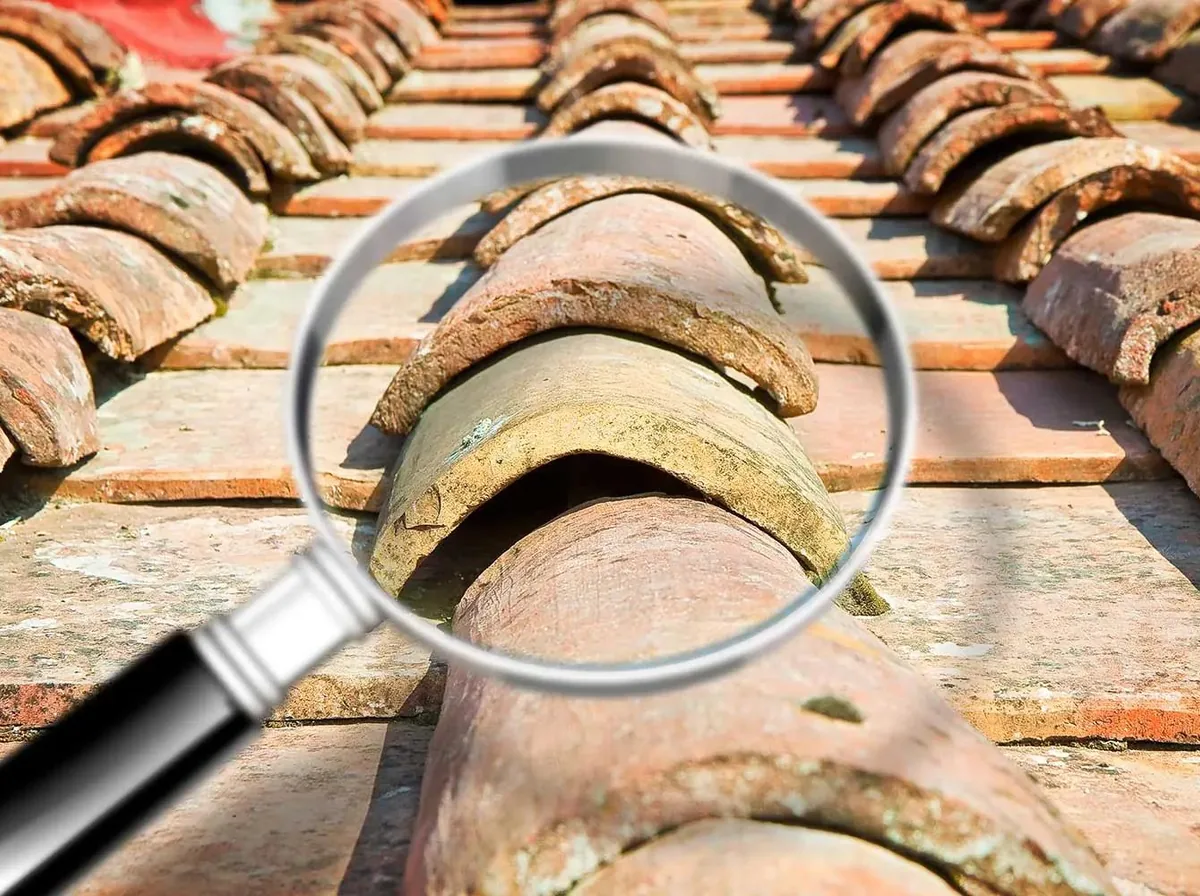
Many garages, outbuildings and sheds built in Belgium before 1998 are roofed with corrugated fibre cement sheets containing asbestos. As long as they stay intact and nobody touches them, the risk is low. The danger starts the moment you break, drill, cut or brush them.
How to spot a suspect sheet
- A roof or cladding in grey corrugated sheets fitted before 1998.
- A rigid, brittle material with a slightly fibrous surface once it has degraded.
- Rectangular artificial slates from the same period.
- Chimney or flue ducts in fibre cement.
The age of the building gives a strong presumption. Only a laboratory analysis gives certainty, and that is easy to arrange.
What Belgian regulations say
The law distinguishes non-friable asbestos — fibre cement sheets — from friable asbestos, which is far more dangerous. A private owner working on their own property may still take down non-friable sheets, under strict conditions. Any company working on someone else’s property is bound by regulated procedures.
In practice, it is not just a legal question. A badly run removal contaminates the loft, the garden and the gutters. Taking the sheets down one by one without breaking them, in sealed packaging, costs more than a pass with an angle grinder — and that is exactly why it is done that way.
How a tidy job runs
- Identifying the material and its condition.
- Administrative formalities and letting the immediate neighbours know.
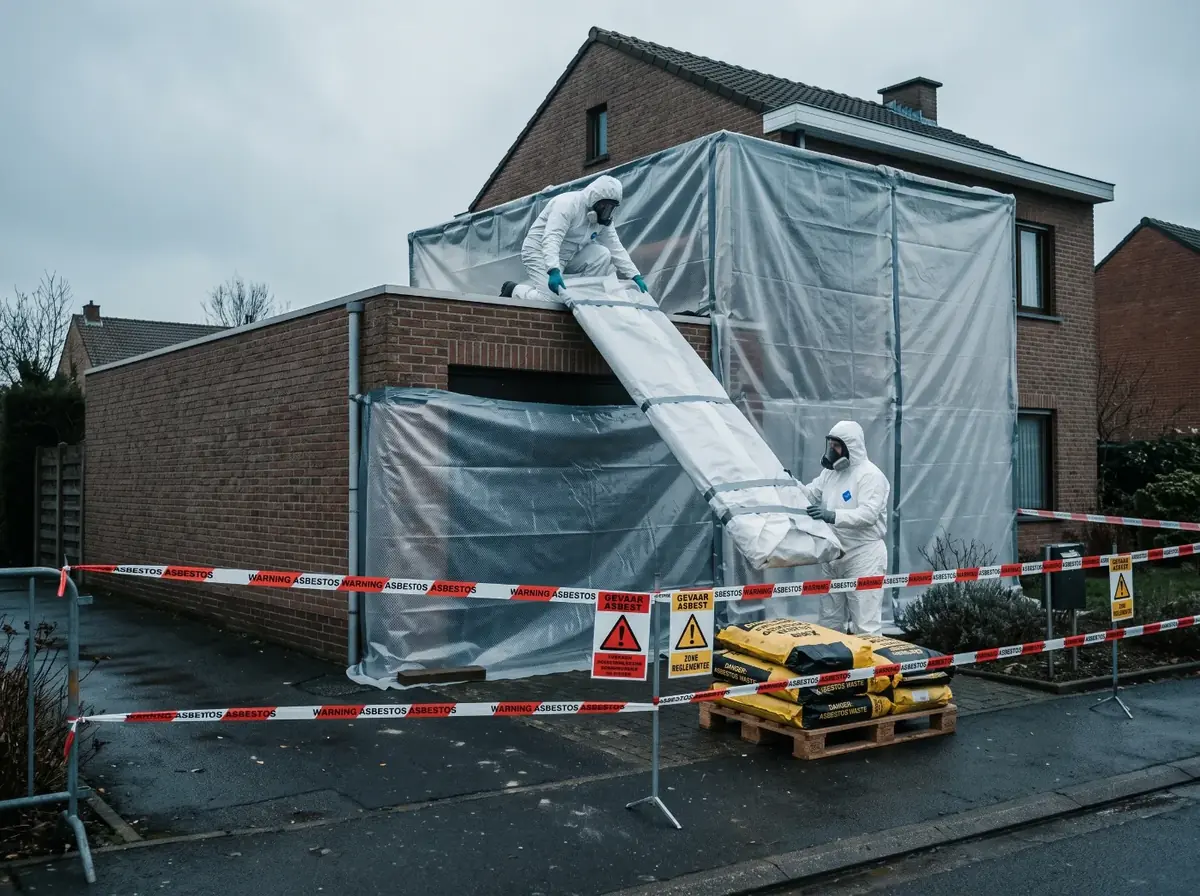
- Zone cordoned off, ground protected, personal protective equipment.
- Removal by hand, with no cutting or dry brushing, damping down where needed.
- Double sealed packaging, regulation labelling.
- Disposal at an approved centre and handover of the disposal slip.
Straight on to the new roof covering
This is the right moment. One firm, one schedule, no period where the building sits open between two visits. And the disposal slip stays your proof, to keep with the house papers.